
Two lottery lines can contain the same combination in different orders
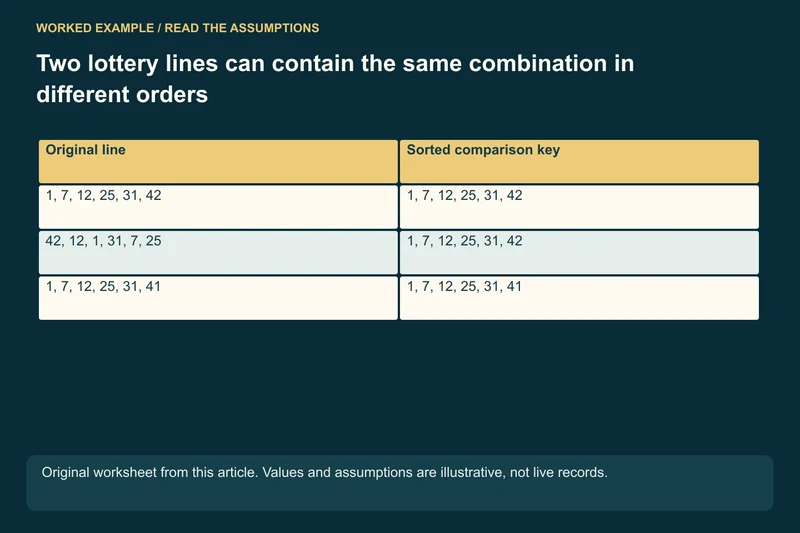
The lists 1, 7, 12, 25, 31, 42 and 42, 12, 1, 31, 7, 25 contain the same six distinct numbers. Under an unordered six-number model, they represent one combination even though they are written differently.
For the topic overview, see Number range and required matching count.
That mathematical identity is different from ticket identity. Two purchased lines can be separate records containing the same combination; you must not delete a genuine transaction simply because its numbers match another line.
State whether order is part of the game
OpenStax’s counting principles distinguishes combinations from ordered arrangements. We use an unordered six-from-42 model with six distinct choices. This is a mathematical exercise, not a substitute for any particular draw’s current settlement rules.
If a game requires exact order, the comparison changes. Confirm the game, number range, draw identity and order rule before normalizing a record. A sequence from a different draw is not made equivalent simply by having the same digits.
Create a comparison key without replacing the original
| Original line | Sorted comparison key |
|---|---|
| 1, 7, 12, 25, 31, 42 | 1, 7, 12, 25, 31, 42 |
| 42, 12, 1, 31, 7, 25 | 1, 7, 12, 25, 31, 42 |
| 1, 7, 12, 25, 31, 41 | 1, 7, 12, 25, 31, 41 |
The first two keys match; the third differs by one number. Sorting helps compare sets while the preserved original retains the source’s display order. It does not turn the third line into a partial entitlement or assign a prize tier.
Do not confuse repeated coverage with duplicated records
Suppose accepted ticket records T1 and T2 each contain the first combination for the same draw. They may be two distinct entries with repeated coverage. Removing one from spending records would undercount the purchases. Whether and how any award attaches to those records is a separate rule question.
By contrast, seeing T1 twice in overlapping exports may be a duplicate representation of one transaction. The accepted ticket identifier and line identifier help distinguish that situation from T1 and T2 containing the same numbers.
Keep two useful counts
Count accepted lines to reconcile the record and count unique combinations to describe distinct selections. Those totals can differ. Label them explicitly rather than calling both “tickets” or “chances.”
This method improves an existing ledger without recommending repeated purchases. It supplies no predictive value: rearranging the written order does not create a new unordered combination, and matching comparison keys does not establish a valid ticket, a winning draw or a payable claim.
The gamezone homepage brings together the site’s other reading topics.
Source-based editorial research and original examples. Sources checked 9 October 2026. No real-money play or account transaction was performed for this article.